Tuesday, September 27, 2005

What's that taste?

Most of the time, right before I roll out of the gate on a mission, I get the jitters. Maybe not so much jitters, just a very sick feeling in the pit of my stomach. It’s this queasy knot of fear that I can’t quite control but doesn’t really incapacitate me. Usually it hits after the mission brief, as we are loading up, buckling in, doing that last second check of your gear to make sure everything is where it is supposed to be and is secure. It sits in my stomach, and I usually think something like “it would be really embarrassing to throw up in front of these kids. That wouldn’t do at all.” It goes away when we hit the gate and all that excess adrenaline is routed to my eyes and ears, where it is needed. Then it is all business, yelling about what you see and what to do, pointing out potential hazards to the driver and gunner, yelling into the radio, and trying to stay on top of the chaos of Baghdad traffic. Last week, as we were rolling out, we were talking about one of the villages we would be going through, doing an assessment of some construction being completed there. I told my crew to that this was a nasty insurgent village. I mentioned that the last time I was there, doing a cordon and search, we had gotten into a firefight with some jokers on the other side of the Tigris, who lit up our cordon as we were searching a riverside house. I said that during the firefight, I was hiding behind a wall, wetting my pants and sucking my thumb (Only partially true). The laughter shed some tension, and my stomach relaxed.
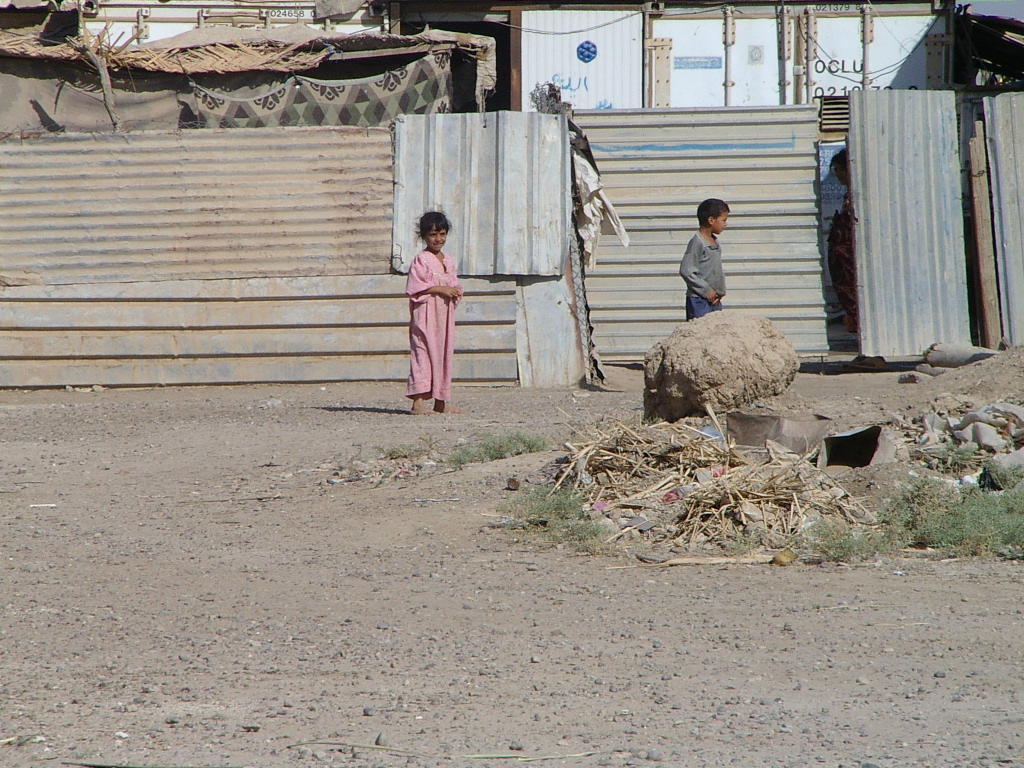
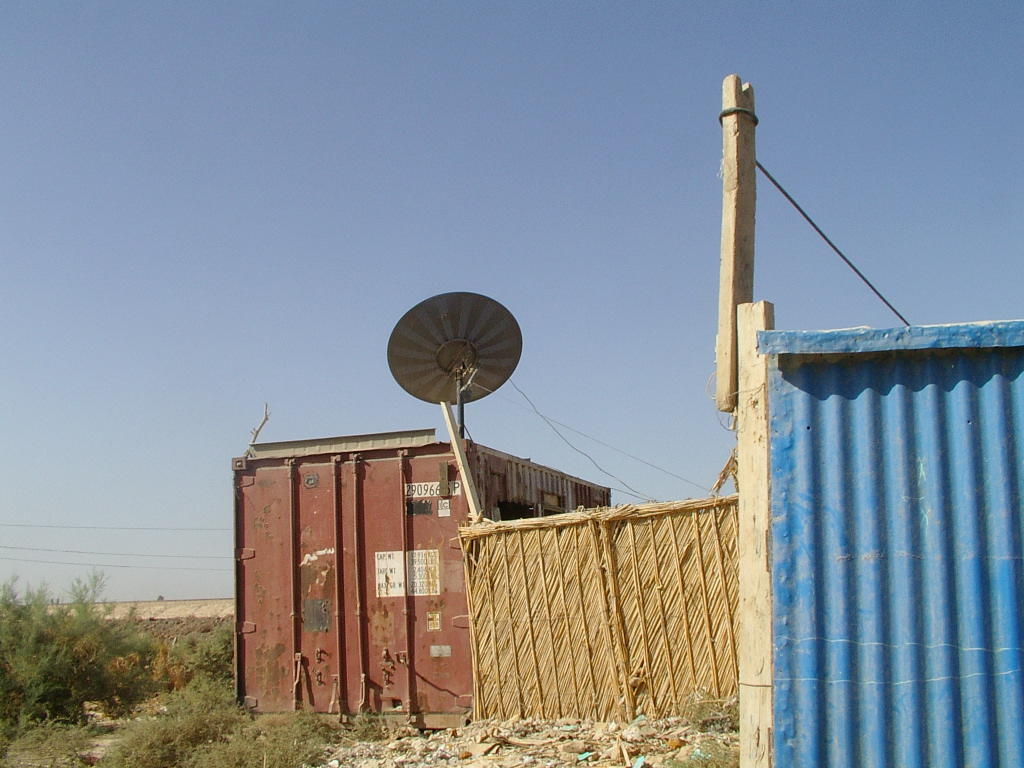
We hit the road and pulled into our first stop, everything went great, happy smiling kids waving, yada yada yada. The poverty in this little squatter’s village, alongside a canal leading to the Tigris, is as abject as it gets. One of the “homes” we parked beside was an old conex container with a door and window cut out of it, with a satellite dish on the roof. One of these days I will get around to posting about the post war Baghdad real estate market. Anyway, as we were leaving that village, rounding a line of buildings that border the highway, we spotted a guy digging a hole next to the road. Now in Iraq there is only one reason why some guy would dig a hole next to the road, and that is to throw an IED in the hole. Imagine his surprise to suddenly find 3 humvee’s surrounding him, and 3 M240 Bravo’s pointed at him. We searched him and his car, and turned him over to the Battalion QRF (quick reaction force). A short lived success, 2 days later another US patrol was hit by an IED in the same spot. We moved down the road to our next stop, a school we are renovating. We were supposed to meet a civilian contractor there, who was going with us to the “nasty” village. The contractor showed up without his car, and asked if he could ride with us. The fact that he was unwilling to drive his own car into that particular village was enough to make us reassess the necessity of going into that village that day. We decided the work could wait for another day, when perhaps we weren’t expected. In Iraq, dropping by unexpectedly is a good way to do business.
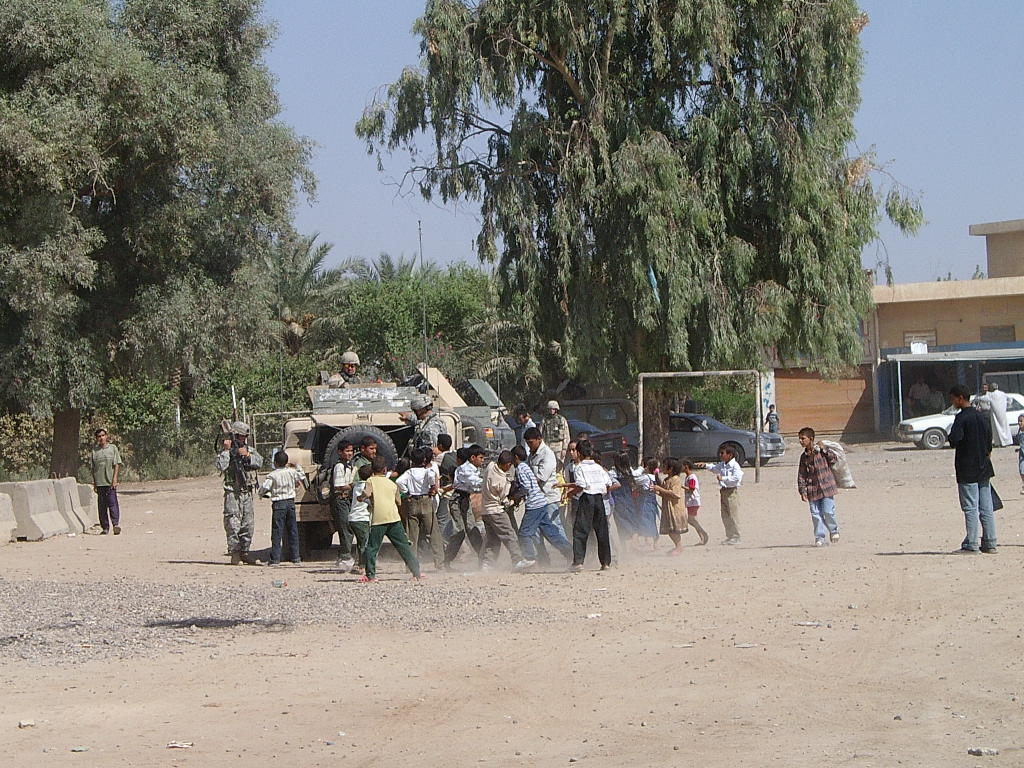
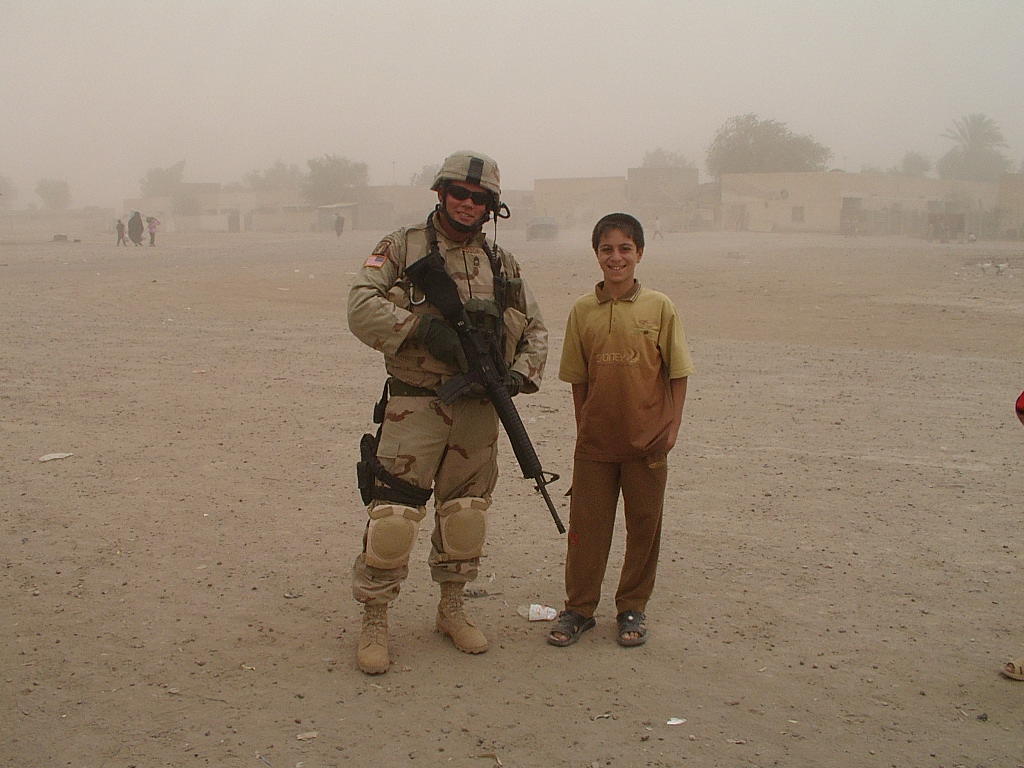
We revised our route, and stopped into another village to talk with some of the local civilian leadership. This village is reasonably friendly, and full of happy smiling kids, yada yada yada. We started handing out toys and goodies, which always causes a near riot of kids fighting over the best stuff. We had a couple of soccer balls to hand out. These are the prime items for the boy in the village. Scoring a “futbul” makes their week. One of the things I have learned over the years is that if you want to know what is going on somewhere, ask the kids. So I did. I asked, in Arabic, one of the preteen boys surrounding us if there were any problems with bad guys. He replied in perfect English, while rolling his eyes and pointing to the village across the highway, “yeah there are wahhabis in that village, now give me a F#*&ing futbul”. OK then, I guess I am not the first American soldier this kid has had contact with!
Finally, the glad handing is over, the goodies are distributed, progress is made. We mount up, and head in. Final tally: an IED delayed, a terrorist in jail, a school gets just a little closer to complete, and a village gets maybe too Americanized. Not a bad morning.

Wednesday, September 21, 2005

Dad interrupted

On Friday, my Wife and I celebrated our 16th anniversary. It was the third anniversary we have spent apart, and each time I promise that this will be the last time. Somehow that hasn’t worked out yet. 8000 miles and 9 time zones is a long ways apart, but we managed to spend some time together anyway. It was early evening here, late morning there, the kids were at school, and I was done with work for the day. We chatted, flirted, and blew each other kisses on the webcam. We smiled and laughed. We talked about the past and the future and pretended that the present wasn’t real, like we were on a date, enjoying dinner and each others company. Keeping a marriage going is tough under any circumstances, but we are pretty much a statistical miracle. 3 deployments, and 9 years working in a prison, night’s weekends and holidays, working Christmas day or Thanksgiving evening, it amazes me still that she stuck with me. What the hell is she thinking? Well, whatever keeps her from tossing me out like yesterdays trash, Thank God for it!

Missing another anniversary reminded me of all the other moments I have been missing. A couple of weeks ago, school started. Our oldest daughter (the artist) started high school. Our middle Daughter (the athlete) started middle school. And our youngest Son(the Jedi) started second grade, his first year of being “alone” at school, without the burden of a big sister running around the school creating oh so unreasonable expectations for him. The Artist is keeping my absence a secret from her teachers to avoid any special attention it may bring, because talking about it with people who lack a mutual perspective just doesn’t help her deal with it. She made me very proud the other day when she told me that she doesn’t like her government teacher because “Dad, she is really liberal”. I get the feeling that if this particular teacher knew that The Artist spent Election Day 2004 waving a Bush/Cheney sign over Highway 10, it may cost her a few points on the final. She is currently scheming to create the perfect moment to inform this teacher that “My Dad’s in Baghdad and he says wishing failure on his mission does not support him!” She chuckles with glee when she talks about this, and at the same time feels bad that I am not there to share the fun. Her confirmation is next spring, and I will be home.

The Athlete doesn’t share too much with me about how she feels, until it is time to say goodbye, then the emotion comes surging to the surface. She has always been the fiery one, tough as nails and determined, but still a little girl when faced with a father going to war for what seems a lifetime. The single most painful moment of my life was in 1996, as I was leaving for Bosnia, when my name was called to get on the bus. The athlete, who had been tough through the whole thing, asking questions and taking in answers with little comment, watched me turn to climb on the bus and screamed, as only a 3 year old can, “Daddy Noooooooo!” as I walked away. How I climbed onto that bus I don’t know to this day. Subsequent goodbyes have gotten easier, sort of, if only through repetition and familiarity. Hockey tryouts start in 2 weeks. I won’t be there.

The Jedi, named that because he is 7, and what else could a 7 year boy old be? While I was home on leave, we saw “Revenge of the Sith” together. It was all he would ask me before I came home. “Dad, are we going to see Star Wars together?” As far as he was concerned, once we checked that box, it was a successful vacation. The rest was icing. His current plan involves building a clubhouse in the backyard together when I get home. The plans are elaborate, as they should be. When I asked him how we would build the clubhouse in the middle of winter, when I get home, he applied perfect 7 year old logic: “we can build it in the garage, and then move it when the snow is gone”. As far as I am concerned, it is a perfect plan. A few minutes a day of sweeping snow off of cars, and scraping windows, is an insignificant price to pay. Cars come and go; clubhouses last forever in a son’s mind.

Four more months. I get to be a real Dad again in four more months.

Saturday, September 10, 2005

Has it been a week?

This has been a busy, boring week. I have spent a lot of time doing mundane stuff that must be done but still turns the mind to mush. Inventories, evaluations, and a lot of correspondence about a lot of stuff that is necessary but not very exciting. The dirty little secret of war is that these things don’t stop, as much as I wish they would. We are starting to plan for our redeployment, still 4 months away, but, like Christmas shopping, you can’t start too early.

The saving grace of the last week has been the temperature. We are starting to see perceptible dips, at last. Now I never in my life thought that I would be calling highs of 115 cooling off, but amazingly enough that is the case. It has been getting down into the low 70’s at night, and staying below 100 until late in the morning. Just a couple of weeks ago it would start at about 98 in the morning and head up into the mid 120’s by 11:00, and stay there until sundown. Hopefully in a few weeks the temperature will be bearable around the clock, and we can start to open windows, and get some of the summer funk out of our rooms. In Minnesota, we look forward to spring so we can throw open the windows and get some fresh air after a long winter, after surviving in heated spaces for 5 or 6 months. Here, the cycle is reversed, and autumn gives us the chance to air out rooms that have had air conditioners running non stop, not staying ahead of the drying sweat smell in the rooms. After 6 months of sweaty socks, boots, and t-shirts, my room REALLY needs to air out. Gold Bond can only do so much.

When I think back over past deployments, there is always some environmental factor that stands out, some unpleasant memory that defines that particular place. When I was on the USS John F. Kennedy, it was the constant noise, hum, and motion of the ship. In the Balkans, it was the mud. And here, it’s going to be the heat, the pain of inhaling mouthfuls of dust and fire, and feeling the water leave your body faster than you can replace it. I believe in what I am doing here, but I will not miss this place.

I thought I would throw in a few links to some great posts I read this week. I have decided that this essay in particular, Tribes, needs to be read by everyone. Bill Whittle is a genius. Read it, and then take a moment to define yourself. I have decided that after 22 years of military service and 9 years working as a corrections officer, I have probably earned the right to call myself a sheepdog. I am somewhat at peace with the fact that even if the sheep do not want saving, and may curse being saved, save them I will, because it is my nature. I know the wolf when I see it.

Ben Stein does a great job of stating the obvious here.

Here is a great timeline of Katrina and the aftermath, and here is a nice “grey” look at the math.

For those who toss around the “chickenhawk” label.

Saturday, September 03, 2005

As fast as they can

The events of the last week in New Orleans have left me, well, speechless. Even the tragedy in Khademiya, just a few miles from here, on Wednesday, where nearly 900 Iraqis were killed in a human stampede seem insignificant compared to Katrina’s aftermath. That makes it tough to post from here, because while yes, the war does go on, everyone’s attention is focused on New Orleans, which is as it should be.

I do want to spout off a little bit at some of the critics who are attacking how long it took for the military to arrive. There seems to be a perception that the National Guard is available at a moments notice, capable of just rising out of the ground where they are needed, instantly capable of providing food, shelter and medical care. Reality is that it’s going to take 2-3 days from the time the Governor decides they need large numbers of Guard troops until any are available. Think about it. What needs to happen? What are the troops needed for, what’s expected of them, what expectation is there of the need for force, how long are they needed, what facilities exist to support them logistically, who is in charge….these are just a few of the questions that need to be answered before the first phone call is made. Then units start to get called up. 24 hours minimum to get 75% of your soldiers to the Armory. The other 25% are out of town, or they moved, or gave us a bad phone number, or any one of many other excuses. Then you start getting trucks loaded, weapons issued, ammunition drawn, food and tentage loaded, life support for the troops coordinated, turning the probably very general deployment order into an executable Operations order, and finally start moving. That’s another day, minimum. You’re looking at 72 hours from the time the Governor says “we need the Guard” until you can put any troops on the ground. Logistics convoys that can actually deliver relief supplies will take another 24 hours to load, minimum. If everything goes right, and the relief supplies needed are actually on hand in the quantities needed. So 4 days to get relief supplies delivered.

If I recall correctly, the Governor of Louisiana asked for troops on Tuesday. Troops began showing up on Wednesday, were providing security on Thursday, and food showed up on Friday. That is actually a phenomenal response time. Now those troops need to be supported logistically, meaning tens of thousands of meals daily, thousand of gallons of water, medical support just to keep the troops healthy not to mention the victims, billeting, toilets, and trash removal. Add to that fuel and maintenance requirements. Not an insignificant task.

I just ask people, before you get too critical of the response, to consider the scope, the numbers, and the reality of how long stuff really takes to get done. It may not seem fast enough, but it is as fast as it can be.

Monday, August 29, 2005

Similarities

I was surfing around a few blogs this weekend and came across one via Mudville that really grabbed me. Sunshine is a 14 year old girl from Mosul, writing about life as an Iraqi child growing up in war. I fervently hope it doesn’t turn out to be something like this.

What really grabbed me about her blog was how much she reminds me of my own 14 year old daughter, the same tastes in music, movies, books, and the same sensitivities and optimistic hope in the basic goodness of humanity. They even have a younger brother and sister in common. As I read Sunshine’s words it was my daughter’s voice I heard, and I imagined her caught up in this madness. I admit that thinking about her, going through what Sunshine has gone through, brought a tear to my eye. No father wants to imagine his child living a life like that, I mean, that’s what we are supposed to protect our children from, that’s what I tell myself I am here for. Like the quote on the top of the page says, “If there must be trouble, let it be in my day, that my child may have peace.” I believe to the core of my being that I am helping to bring my children peace. I only hope that along the way, Sunshine can know peace too. In spite of what some are telling you, that day is not so far away.

This post did bother me. Here, Sunshine tells of an American patrol searching her home, and while most of the soldiers were respectful and courteous, one did damage some of their belongings. This bothered Sunshine, as she believed that if she was polite and welcoming to the Troops, they would respond in kind. I hope she still retains some of that belief. Her story reminded me of the first Cordon and Search operation I participated in, a joint U.S. & Iraqi army operation in a village near here this past April. We received intelligence that several “persons of interest” and information we were interested in were located at a house in the village. Now again, I am not going to give out operational details, but we went in, secured the area, and searched the target house. Turned out the intell was close, but not perfect, and the first house we searched was the wrong one. We wanted the guys next door. Luckily, because everyone searching, U.S. and Iraqi, was respectful during the search, we didn’t alienate a house full of innocent people. They went back to bed, we took down the right house, and got what we were looking for. That was the first time I was in an Iraqi’s house, and what struck me was the fear in the eyes of the children. 10 soldiers going through your house at 5 in the morning is a scary thing no matter how nice the soldiers are. I didn’t let it bother me at the time, but those eyes haunted me for a while afterward. Maybe they still do. Knowing a mission is noble doesn’t mean you don’t feel guilty about how it’s accomplished sometimes.

Tuesday, August 23, 2005

Jeeb Ginsea Jedeeda

This country loves forgeries. They aren’t very good at it, but they love insisting that their forgeries are in fact authentic. Whether it be watches, DVD’s, or identification, they love to make knock offs.

I see a lot of Iraqi ID’s in a day, and the phrase above, which literally translated means “get Identification new”, is a sentence I have mastered. I utter it several times a day, and then smile as I hear the onslaught of excuses. “No meestah, is good ginsea!” “Not fake, I’m from Basrah, this is how Basrah ginseas are.” ”Iraqis only get one ginsea, you cannot get new one.” Sometimes, they get a perplexed look, and say “how could you know this?” as an incredulous Iraqi wonders how an American infidel could possibly tell that the piece of paper in my hand was not legally issued by any Iraqi government office. I am not going to get into the specifics of how we identify the forgeries, but I will say that if they ever master “spellcheck” my job will get a lot harder.

Add to this an apparent cultural belief that if you forge the document yourself, that somehow makes it authentic. Many times I have turned someone away because the picture on their ID was unrecognizable, for instance they are 30 years old and the picture is of an 8 year old. The next day they are back, with the same ID, and a current picture of themselves laminated right on top of the old one. When I explain that this is not adequate, they indignantly point to the picture and say “But this is me! I change it!” They simply cannot understand how I can have a problem with that logic.

They get these fakes from local Souks, or markets, that look like a cross between the sets of Casablanca and Mad Max. These outposts of capitalism give me confidence that freedom can work here, because they certainly have the instincts for it. According to rumor, any document can be created in 15 minutes for 5 dollars, as long as you are not too picky about the quality. I joked with one of my NCO’s recently that if he needed to get his passport renewed, he should do it in the Market, as long as he didn’t mind a passport from the “Unitted Stats of Amrika”.

By the way, if you see me back home wearing a Rolex, rest assured: “is real meestah, very good watch!”

Saturday, August 20, 2005

Almost

I was going to write a post today celebrating going a week without any indirect fire attacks (rockets or mortars) on the FOB, but this morning a soldier walking out to his vehicle found an unexploded 57mm rocket sticking out of it. He is pretty confident it wasn’t there the day before, so….Hey we went 6 days without any indirect fire attacks!

Contractors: Can’t live with ‘em…..

One of my daily challenges is dealing with the multitudes of civilian contractors performing work on our camp. This article in the Tampa Tribune discusses some of the reasons that people decide to come to Iraq to work, and it focuses on the biggest; the money. Lots of money. The individual employees of these firms are making money hand over fist, and loving it.

My issue with contractors is not their paychecks, because I can make a strong case that paying someone $120k to work in Iraq for a year, costs less than recruiting, training, equipping, and paying a U.S. Servicemember to do the same job. When we eventually drawdown forces in Iraq, those active duty troops still have to be paid, housed, and trained. They will continue to cost the taxpayers money. The contractors, on the other hand, are a pre-trained no strings attached package that stops costing you, the taxpayer, money as soon as they are no longer needed. Since I do pay taxes when I am not deployed, I worry about things like that.

As for the argument that “this war is all about making money for Bush and Cheney’s Halliburton cronies”, the financials just don’t bear that out. Here is Halliburton’s income statement; their net income was NEGATIVE $979 million in 2004. Hard to get rich losing a billion dollars a year. And by the way they have been providing logistics support to the Military since well before Vice President Cheney ever had any association with them. The reason that they get these contracts is that no other company on the planet can do what they do in the environments they do it. They do need to hire some better accountants though. Great company to work for, not so great to own.

No, my problem is not with the money, I think it is likely that they save us money in the long run, my problem is their mindset. My job in a nutshell is deciding who gets past my gate, either on foot or in a truck. The Contractors need to get their local workers on to complete projects that they have deadlines on. If I decide that the person on the other side of the gate represents a security problem, I say no. This puts the contractor, who claims to “need” this guy or his cargo, in a bit of a pickle. I have had several confrontations with contractors who found our security procedures inconvenient. I had one several days ago which resulted in a contractor saying “I am never coming down to this gate again!” Well, good riddance buddy. I had one yesterday tell me that because of me, we would have to close down a chow hall because I wouldn’t let his one indispensable worker on the camp. Turns out the real reason he “had” to have this worker was because he had already been paid for the job, not because he was the only guy in Iraq who could rig a crane. He actually had the cojones to go over my head to try to get his worker on; thankfully the “3” backed me up.You know, they have to sleep here too; I would think that they would value their security over their paychecks. Tough to spend that money with a 107mm rocket sticking out of your chest.

Well, I am ranting here so I better get to bed. Need my rest so I can protect this camp from itself again tomorrow.

Tuesday, August 16, 2005

Thanks!

My thanks to Greyhawk at Mudville, and Sandy at the M.A.W.B. Squad for their kind words about my Blog. I am humbled by the attention.

Body armor Redux

This headline in the NYTimes caught my eye : U.S. Struggling to Get Soldiers Updated Armor. This is the opening sentence:
For the second time since the Iraq war began, the Pentagon is struggling to replace body armor that is failing to protect American troops from the most lethal attacks by insurgents.

Now I would hate to accuse the “newspaper of record” of displaying bias in it’s reporting, but it would have been equally as accurate to say this: U.S. upgrading Body Armor to protect servicemembers.
For the second time since the Iraq war began, the Pentagon is upgrading what is already the best body armor in the world to further protect American troops. The current armor, which has saved countless soldiers lives, is being upgraded with better protective inserts, in response to the increased lethality of insurgent attacks, primarily from weapons being provided to the insurgents by Iran.

Both stories would have been equally accurate. Both are biased in a particular direction. At least I admit it.

I have worn a lot of body armor over the years, and I can state as an expert that the Interceptor body armor (IBA) I wear for 10 hours a day, every day, is the best I have ever used. In the Marine Corps, and in Bosnia, I wore the standard PASGT “flak vest” which provided good protection from fragmentation and shrapnel but was worthless against rifle fire. In Kosovo, I wore “ranger body armor” (RBA), which was considerably heavier and more difficult to move in, but provided protection from rifle fire, through HEAVY front and back plates inserted into the vest. Unfortunately, this armor was not effective against shrapnel, as it lacked adequate side and neck protection.

Now I wear IBA, and it provides better protection from both rifles and shrapnel than either of the types of armor I have worn before, and it weighs less than RBA. It is modular, meaning that I can add or subtract the components I need for a particular mission. It includes a modular neck collar, pelvic protector, shoulder armor, and side armor. It also integrates my rifle and pistol ammunition load, first aid equipment (I carry 4 field dressings, a tourniquet, a chest seal, and a chest tube), 1.5 liter Camelback, and any other equipment I need to carry without having to strap on any more harnesses or suspenders. When I walk out the door in the morning, I am carrying close to 50 pounds of armor and gear. I for one appreciate the Pentagon taking its time analyzing the payoff of adding any more weight to my load! I’d hate to end up like the knights of old, having to be hoisted into my Humvee because my armor weighs so much I can’t walk.

So, I will say it again. We have the best body armor on the face of the earth. I am grateful for whatever improvements we can get, but I don’t feel woefully underprotected if it takes until December.

Sunday, August 14, 2005

Baseball, Apple pie, and Texas hold’em

Junior, one of our interpreters, is a man I consider a trusted friend. One of the rare joys of my job here is learning about Iraqi society and culture from Junior and his brother Fox, one of our other interpreters. Something that is even more fun is introducing American culture to them.

Working as an interpreter is an incredibly dangerous and difficult job, and very few are cut out for it. Interpreters are a key piece of our eventual success here, and all of the various insurgent groups are aware of this. Interpreters are threatened continually, kidnapped often, and murdered occasionally. Our interpreters live on the camps with us, leaving only occasionally at random intervals for extended breaks. They are at their most vulnerable at these times, when they can be identified and followed. For this reason many cover their faces with masks or bandanas when working to avoid being identified as interpreters, and attempt to blend in with the day laborer crowds when they come and go. A stressful undercover existence made tolerable only by the compensation, which in terms of the Iraqi economy is very good, almost $1000 per month. Considering that the 2004 median income in Iraq was $144 per YEAR, this is a princely sum. They answer the question “is it worth it?” every time they come back to work. To them, apparently, it is.

Today, after we finished up at the gate, I headed off to a nightly coordination meeting, and SGT C and Junior went to a softball game our unit’s team was playing in. SGT C went as a player, Junior as a bemused spectator, trying to figure this very foreign game out. During the course of the game, which we were losing badly already, one of our MP’s had to respond to a call. Junior was pressed into service as catcher, ironic because he had never put on a glove in his life. He learned the basics of catching and throwing rapidly, and thoroughly enjoyed the game. Unfortunately, despite Junior’s strong performance behind the plate, we still lost. Base running remains a mystery to him. He asked me after the game “why, after they hit the ball and run, do they just stop running for no reason? How do they know where to stop?” Those lessons will have to be covered before the next game.

Later, after dinner, Junior was introduced to another great American game, Texas hold’em. After watching a couple of hands, he wisely decided to remain a spectator. Can’t say that I blame him, I don’t quite get the game either. But he hung out, told jokes, and listened to some good old American trash talking around the card table. For a few hours, this corner of Baghdad was transformed into a backyard deck in southwestern Minnesota, and Junior got a glimpse of who we are.

Afterwards, he thanked us for a great day, and told me “Today I felt like I was with family.” So maybe what we really need here is 25 million softball gloves. You never know.

Monday, August 08, 2005

The Dust Weather

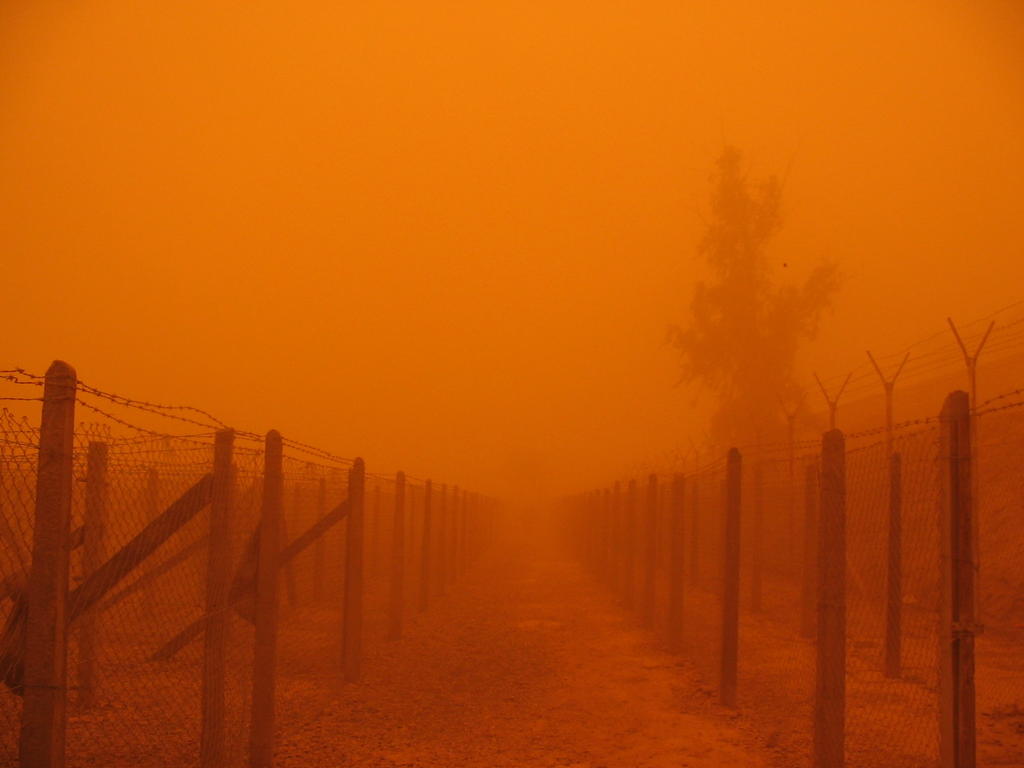
When I reluctantly woke to my alarm clock this morning, I noticed my room seemed unusually dark. My first hope was that I had set my alarm wrong and still had an hour to sleep, but a glance at my watch showed it was indeed time to get up. I staggered to my fridge to grab a Redbull to start the day, and cracked open my door. I was greeted by a wall of sand. It’s called a Shamal.

One of our interpreters, Junior, calls this “The dust weather”, sandstorms that begin in the western deserts of Iraq and Syria. Sand worn to the consistency of baby powder by eons of wind erosion is carried by the hot desert breeze from Anbar through Baghdad and into Iran. Breathing is painful, as each inhalation is accompanied by what seems to be a pound of desert sand. You can’t see unless you are wearing glasses or goggles, because no matter what direction you move, the sand buries itself in your eyes. Clothes, skin, hands and teeth are immediately coated with a gritty dry film. But duty is duty, so we trudged off towards the gate. As we drove, I noticed that the headlights of other vehicles took on an eerie, ghostly blue color, but everything else blended together in a orange and tan swirl.

Junior warned us on the way to the gate that no one would be coming to work that day, and he was right. A handful of Iraqis came in, but for the most part everyone stayed home, except the soldiers. We manned our posts, wrapped our faces up and toughed it out. All I can say is that it has been a long day. When I got back to the “pod”, the collection of trailers that we live in, I climbed into the shower and attempted to scrub the sand off. It had penetrated every pore, through my armor and uniform, into every inch of my body it seemed. Now, a couple hours later, I still feel the film of sand working its way out of my skin, and as I am typing this I am coughing up chunks of the western desert. Junior, ever the optimist, showed me the silver lining; he assured me as we were leaving the gate “the dust weather is not all bad, you’ll see tomorrow the flies will all be dead!” Thanks, Junior, for giving me something to look forward to in the morning when I stagger to the fridge for the next Redbull.

Saturday, August 06, 2005

OpSec and idiots

You may have noticed the disclaimer at the bottom of the page that states “In accordance with Multi National Corps-Iraq policy, this website has been registered with my command.” The requirement for this registration is a little controversial among Milbloggers in Iraq, because lets face it, on occasion we dis on our commanders, and we would rather they didn’t read our words. I admit that knowing the boss might be reading does cause me to hold my tongue a little, or at least choose my words wisely. I understand the reasons for the requirement, and as long as it is not used as a tool to censor viewpoints and opinions, I have no problem with it. The stated reason for registration is to make sure that Bloggers don’t violate operational security requirements. This concern is valid. If you notice, I have never mentioned the specific FOB I operate out of, nor do I use the names of people I am here with, the names of villages in the area, or ever discuss upcoming operations. My name is not easily available here. Those of you who know me know where I am and who I am, and for the rest of you, as much as I would love to be completely transparent, it would not be safe for me, my family, or the soldiers I am here with to do so. I use Tracksy to track hits on this site, and I have seen hits here from Saudi Arabia, Jordan, Egypt, Pakistan, and several other countries around the world. And my Blog has only been up for a couple weeks! Now I’d hate to be accused of profiling, but this information makes the intel sgt. in me think that perhaps the bad guys could be using Milblogs to troll for information. Well they ain’t gonna get it from me.

However, it does seem they were getting it from this guy: PFC Leonard Clark. If nothing else, this guy is guilty of being an idiot. Looking through some of his writings, and the writings of some of his supporters, gives me a lot of insight into who Clark is, but doesn’t answer this question; why is he a 40 year old E3? He deployed as an E4, which means that he either joined the Guard recently, or he has not been promoted in about 20 years. Not exactly a normal situation in either case. I haven’t been able to find out how long Clark has been in the military but I am curious. It would fill in a lot of questions I have about this guy.

Clark accepted article 15 punishment for releasing classified information. Additionally, he is a bad soldier with a lousy attitude. Either way, he is endangering other soldiers and hurting the morale of his unit. I am all about free speech and have spent my adult life defending it, but get a clue Private! If you have in fact experienced all you claim, you know that this is the real deal, and your actions have consequences. Think about them before you hit the “publish” button.

Seriously, the brass is hot.

Even in Iraq, Army training continues, and the best Army training involves getting to shoot, any weapon, anywhere. Today I got to fire on an Iraqi army rifle range, quite a change from the huge automated pop-up target ranges soldiers normally train on. Here it’s just a berm, a few lines of sandbags, and target racks made of old pallets held up by metal fence posts. But marksmanship is still marksmanship, and while the automated ranges are great, it was a hell of a lot of fun to shoot on that little, beat up, and heavily used range. Our camp hosts one of the Iraqi army basic training sites, along with several battalions of trained and operational Iraqi army units, so the ranges are always busy and the times that we can squeeze in are rare. We have had the opportunity to familiarize ourselves with AK-47’s and PKC Machine guns, which basically means taking them out and shooting them until we got bored or run out of Ammo (always the latter). Today we qualified again with our M16’s, which is a far more structured event. It went well for the most part, with one exception; since the range is small, the firing points are very close together. When you fire an M16A2, the brass ejects out the right side of the weapon, usually slightly forward but not always, and normally flies 4-6 feet. So today I found myself attempting to fire in the prone position, 5 feet to the right of another soldier. Brass, when ejected from an M16, is really, really hot. I mean really hot. Like branding iron hot. It also has the uncanny ability to fly down shirts, up sleeves, and occasionally down the back of your pants. I experienced all of the above. I did manage, is spite of the constant pelting of brass, to shoot a decent score, but significantly lower than I am used to. I was a little pissed at the time, but now that I have had a few hours to tend my wounds, I have calmed down. Hey, I got to shoot. The burns will heal. It could be worse, a lot worse. It could have gone down the front of my pants.

As an aside, if you are interested in taking a look at training of the Iraqi army from a soldier training them, I recommend checking out Making the NIA. He was here on our FOB until recently, when "his" battalion of Iraqis was relocated. He tells the straight story, good and bad. His blog unfortunately doesn’t do justice to his sense of humor. He is by far the funniest person I have met here, able to make light of any situation. He hasn’t posted recently due to very intermittent internet access at his new FOB. I hope this improves soon; I miss his wit, insight, and company. Good luck, my friend. Stay safe.

Sunday, July 31, 2005

NIMBY

My office has several responsibilities here, primarily dealing with controlling access to our FOB. One of those responsibilities, which really bears no relation to the rest of our work, is to register the non-tactical vehicles on the FOB. This is a very important security related task, as unidentified vehicles are obviously a security concern. None the less, it really bears little relation to our primary job of interviewing and screening Iraqis coming on to the FOB. I came up with the idea of moving this piece of our operation to a building our unit is refurbishing and will be moving into shortly. This building is about 4 times as large as the offices they are currently working out of. Our office, located at the main gate, is about 12 by 15 and we have 4 soldiers and 2 interpreters working there. Everyone in our office thought it was a great plan, free up space at the gate and allow 1 of us to work away from the gate, and out of body armor, each day.

Yesterday, I began looking for “real estate” in the new building, talking with people from each section moving in and explaining our plan. Everyone thought it was a great idea, as long as we didn’t move into “their” space. Our MP detachment thought it was a brilliant plan, and we should move into the operations office. Operations thought that base support would be a great place to move, and base support thought the MP office was the obvious choice for what was clearly a law enforcement function. Everyone loves the idea, as long as it is placed somewhere else! FRUSTRATING!!! My fear is that, in an effort to not ruffle any feathers among those who are gaining several thousand square feet of space and don’t want to give us 30 square feet, the powers that be will come up with a compromise solution that puts us in a parking lot somewhere, rather than the much more palatial digs the rest of our unit will gain.

So, it appears the battle lines are drawn, the die is cast, and the gauntlet is thrown down. We’ll see how it works out, but for today I feel a bit like a toxic waste dump; everybody agrees we need it, as long as it’s “not in my backyard”.

Saturday, July 30, 2005

Point Counterpoint

Mary, whose Daughter, 1LT G, is my OIC (Officer in charge) here, disagreed rather adamantly to some of the points I raised in my post regarding Citizen–Soldiers serving in Iraq. In response to her concerns about the accuracy of my assertions, I feel it is important to provide some references in defense of my comments.

In reference to the post Vietnam transformation of the armed forces, this article from NGAUS, regarding SECDEF Rumsfeld’s opposition to the total force concept and the origins of the policy, and this from the Foreign Policy Research Institute, regarding the total force policy and the Abrams doctrine in the 21st century. I didn’t just make this stuff up, it is in fact policy. If you are a fan of PowerPoint, this presentation from OSD (RA) may provide some additional illumination regarding the make up, mission, and future of the Reserve components.


Regarding the belief that prior to 9-11 the longest a reservist could be overseas was 6 months cumulatively; I wish I had known that before I spent 14 months in the Balkans on 2 separate presidential selected reserve call ups (PSRC), both with a maximum duration of 270 days. This FAQ sheet from defenselink shows the specific guidelines and legal authority for the 3 separate types of reserve call ups, PSRC, Partial mobilization (which we are under now) and Full mobilization, last used in the fall of 1940, prior to Pearl Harbor, mobilizing the entire National Guard to active duty for the duration of the war plus 6 months.


I understand Mary’s anger at what she perceives to be an injustice, her daughter’s involuntary extension of obligated service. I often share it when I sit alone, missing my Wife and Children, and think of the sacrifices they have so unfairly had to make with my all too frequent absences. I can’t go back and change the words of a recruiter who glossed over the reality of being a soldier in any component of the Army, but the rules haven’t changed; it’s just that most people didn’t know them.

Friday, July 29, 2005

How does she do it?

Reading this post over at M.A.W.B. made me think of My Darling Wife back home, and everything she is going through keeping our family going without me. You are amazing! Of course, it may be easier without me there, one less "kid" to take care of. Either way, you are incredible. Thanks for all you do, and I love you completely.

Thursday, July 28, 2005

Why are Citizen-Soldiers in Iraq?

Reading this OP-ED Piece in the NYTimes by Stanford history professor David Kennedy, claiming that today’s Army does not reflect the mainstream of America, brings to mind a conversation I had while I was home on leave.

My family and I went to Chicago over the 4th of July weekend. One morning we were walking along Michigan Avenue, and my Wife and daughters decided it was time to do some shopping. My son and I decided that this would be a good time for some male bonding, so while the ladies were enjoying the multitude of shopping choices, we popped into a nearby Starbucks. I got a mochachino, he got orange juice. We grabbed a table outside and sat down to people watch, and the gentleman at the next table struck up a conversation. Eventually, after he discovered I was a National Guardsman home from Iraq, he asked a few questions about the war. He was a Chiropractor who had joined the Army reserve during the Vietnam war to, in his own words, "dodge the draft". He asked me if, when I joined the guard, I had expected to serve overseas, because "after all, the Guard is really for floods and things like that". I explained that I was a member of a Field Artillery battalion assigned to an Infantry Division, not a sandbagging battalion in a flood fighter division, and that the primary mission of the National Guard is to provide combat units for federal service, with a secondary mission of providing military support to our respective States. I further explained that I had drawn more combat pay in the National Guard than I had while on active duty in the Marine Corps in the mid 80's, having previously deployed to both Bosnia and Kosovo in the 90's, before deploying to Iraq. He continued down this track, and asked "Well, shouldn't we have a bigger active Army then?"

A great question, with more depth than he realized. The answer to the question, and it's implication that Reserve component troops should not be fighting, goes back to his own Vietnam experience, and also illustrates the fallacies in Kennedy's editorial. First, to counter Kennedy's assertion that today's military does not reflect mainstream America: in just my small unit here, we have teachers, college students, police and corrections officers, network administrators, engineers, a car salesman, a stockbroker, a farmer, truck drivers, and machinists, just to name a few. We represent mainstream America, and we have families, communities, and employers who are sacrificing while we are here. This reality, this representation of America, is why, after Vietnam, the military leaders of the time decided to rebuild our Armed forces in such a way as to prevent our political leaders from ever being able to do what LBJ did in Vietnam; fight a major war without mobilizing the citizen-soldier. You can talk smack about Generals all you want, God knows I do, but they recognize that war needs to cost politicians political capital, or they will be far too quick to wage it. Today's military cannot fight without the Guard and Reserve, and that is a GOOD THING. The military should not be committed to action without sacrifice by mainstream America because only then are those who decide to commit us held accountable.

Regardless of your opinions of the war, it is likely that you know someone who is serving or has a family member serving. It is also likely that they are Citizen-soldiers. We are volunteers who knowingly accepted this burden. Our communities and families are sacrificing. We are mainstream America. And that is how it should be.

Monday, July 25, 2005

One more drip


The most rewarding part of my job here is the occasional opportunity to participate in Civil Affairs missions. Our unit is currently refurbishing a school near the base, and we are using some of the civilian expertise of our soldiers to help plan and execute infrastructure repairs to several villages in the area. I got to roll out on one of these missions today as part of the security element for several officers who were meeting with local village leaders to discuss their needs and how we can help. It was a straightforward mission from a security standpoint, roll in, establish a perimeter around the meeting place, sweep the area and clear the building, and provide local security while the meeting was going on. We rolled out as a mixed element, vehicles from several units that all were participating in the meeting. The village hosting the meeting is within sight of the front gate of the camp, and many of the locals work on the camp, so we felt marginally safe in the village but we certainly had no room for getting lazy. Everything went well, except for getting mobbed by kids looking to score whatever goodies they could from us, since they know we are soft touches. My limited Arabic is always a big hit with kids, I think they enjoy making fun of my butchered pronunciation. We didn't disappoint them, they got to load up on candy and Beanie Babies donated from the States. Thank You to everyone that sends that stuff, it goes to good use! Even the minor sandstorm going on was welcome, as it kept the temp down to "only" 110, a welcome break from the 125+ we have endured the last few weeks.

We had a moment of concern when we heard an explosion at the gate. I looked over and I saw tires and a bumper flying through the air above the explosion. Our first thought was "VBIED (Vehicle-borne improvised explosive device) at the gate" so we cleared the kids away from the area towards safety. After a few moments of radio traffic we discovered that it was a controlled detonation of a suspected VBIED, a suspicious vehicle parked near the entrance of the gate. I won't go into details about what made the car suspicious, but based on what I heard from the soldiers at the gate later, I would have blown the car up too.

The meeting continued, and concluded well. We identified several key infrastructure improvements, and everyone was happy. After returning to the FOB, we stripped off our body armor and aired out our sweat-soaked uniforms. I got to enjoy one of those rarest of feelings here, the belief that today, we did good. One village will have cleaner water because of today. I don't know what will happen tomorrow, but today one more drip fell into the bucket.

Friday, July 22, 2005

Who knows the truth?

As I was surfing through several news sites yesterday, I read a couple of editorials I found interesting. One, from National Review, detailed a tour of Iraq by conservative radio talk show host Michael Graham. During his tour, he spoke to at least 100 soldiers on the ground throughout Iraq and Kuwait. All, according to him, support the war and believe we are ultimately winning. The other editorial, from my hometown StarTribune, had a very different view, believing that our swift departure from Iraq is the most likely way to ensure progress here. I have always believed that when you hear widely divergent views, the truth lies somewhere near the middle, and that is probably the case here.
What angered me about the Strib's editorial was not it's conclusion, although I do disagree with it. I was appalled at the implication that the soldiers in Iraq are somehow shielded from the reality of the war: It's "not politics that blind him from seeing the real Iraq," she said. "The [Green Zone's] maze of tall blast walls and miles of concertina wire obscure the view, too."

Pardon me? The soldiers fighting this war are blinded from the real Iraq? I am shielded from the real Iraq by nothing more than a SAPI plate and a pair of WileyX's. I deal with hundreds of Iraqis a day. I have dealt with Iraqi civilians, Iraqi soldiers, and have been inside Iraqis homes. I have lost friends. My unit is rebuilding and expanding a nearby school, and we are maintaining and improving this FOB, which will be turned over to the Iraqi Army in short order. How dare a journalist, from the comfort of a hotel in the Green Zone, make the implication that we are blinded from the real Iraq! Whose opinions of the violence are really more valid, that of the journalists risking their lives to chronicle it, or the soldiers risking their lives to fix it?

I wonder if the Strib's editorial board, when faced with the reality that most (but admittedly not all) of the soldiers in Iraq believe we are making progress, made the decision to attempt marginalize our experiences by finding an excuse to discount them. Yes, we have a Burger King, we carry pictures of our families who we do miss terribly, and we surround our FOB's with blast walls and concertina. The Strib says children aren't going to school, but I see them in school. The Strib says we are making progress in drips and drabs. Progress is progress, and if you are patient, a bucket can fill a drip at a time.

So who knows the truth? I choose to believe my own eyes.